Study Links Cognitive Behavioral Therapy for Insomnia to Slower Biological Aging on One Measure
09/22/2026 / By Chase Codewell

A randomized controlled trial involving 92 adults ages 60 and older found that cognitive behavioral therapy for insomnia, or CBT-I, was linked to a slower pace of biological aging on one of three biological aging measures.
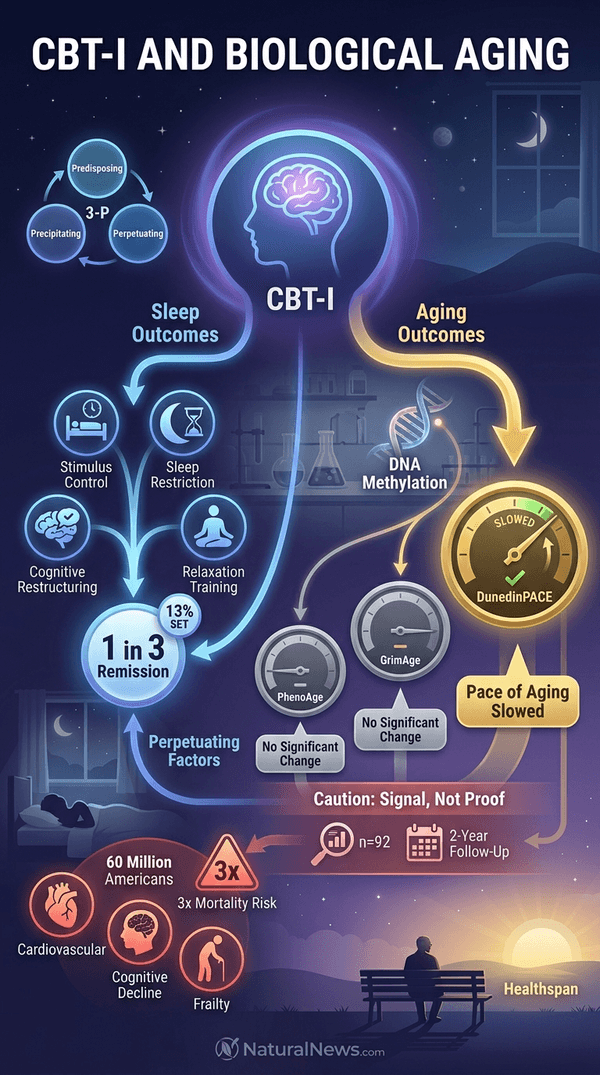
The trial compared CBT-I with sleep education therapy, or SET, over about two years. Researchers measured biological aging using three tools: DunedinPACE, GrimAge, and PhenoAge. According to researchers, the CBT-I group showed a significantly slower pace of biological aging on DunedinPACE than the sleep education group. No statistically significant differences were found between the groups on GrimAge and PhenoAge.
CBT-I also was linked to higher insomnia remission rates. About one-third of participants in the CBT-I group no longer met the study’s criteria for chronic insomnia, compared with 13 percent in the SET group, researchers reported. These findings were described by researchers as an encouraging signal rather than proof that treating insomnia slows aging in every biological sense.
Study Design and Participants
The trial enrolled 92 adults ages 60 and older and randomly assigned about half to CBT-I and half to SET. CBT-I targets the thoughts and habits that maintain insomnia, while SET focuses on sleep habits and biology without the same behavioral techniques. Chronic insomnia is common, with nearly 60 million Americans struggling with the disorder, according to published research [1].
Biological aging was measured at the start of the study and again about two years later using three tools: DunedinPACE, GrimAge, and PhenoAge. The study was described as a randomized controlled trial, which allowed researchers to examine whether improving insomnia was linked to changes in biological aging over time rather than only observing associations.
Chronic insomnia has been linked to cardiovascular problems, cognitive changes, and frailty, the study noted. Prior research has also associated chronic lack of quality sleep with reduced memory and learning, increased risk of dementia and Type 2 diabetes, and an increased risk of accidents [1]. Separate research has reported that people with chronic insomnia have a three times greater risk of death from all causes compared with those who sleep normally [2].
Findings on Aging Measures and Insomnia Remission
After about two years, the CBT-I group showed a significantly slower pace of biological aging on DunedinPACE than the sleep education group. CBT-I also worked better against insomnia itself: About one-third of participants reached full remission, meaning they no longer met the study’s criteria for chronic insomnia, compared with 13 percent of the SET group.
Results were not consistent across all three aging measures. GrimAge and PhenoAge showed no statistically significant difference between the groups. One aging measure showed a similar trend, but researchers said chance could not be ruled out.
Researchers characterized the DunedinPACE finding as an encouraging signal, not proof. The study authors stated that the results offer a signal rather than proof that treating insomnia will help people live longer or slow aging in every biological sense. They added that larger studies must confirm the finding and determine whether changes in biological aging lead to better healthspan or a longer life.
Sleep specialists have long argued that CBT-I should be a first-line approach. Books on insomnia treatment describe CBT-I as targeting the thoughts and habits that perpetuate sleep problems. For example, one clinical text states that CBT is commonly used and that cognitive behavioral and psychodynamic therapies are commonly used to treat generalized anxiety disorder [3]. Another clinical resource notes that chronic insomnia may have underlying conditions but is usually a learned behavior, making it treatable [4].
Professor Jason Ellis, author of a clinical guide on insomnia, has written that even people with insomnia have night-to-night variability in sleep, with occasional better nights, a pattern that underscores the need for sustained behavioral change rather than quick fixes [5].
Practical Guidance and Takeaway
The findings add to a broader body of research on sleep and health. Separate studies have linked sleep disruption to psychiatric illness and cognitive impairment [6]. Other research has examined how sleep apnea affects cardiovascular and metabolic health, with an estimated 22 million Americans affected by the condition [7].
Researchers said chronic insomnia deserves treatment even without the longevity angle, and CBT-I is described as the first-line treatment for chronic insomnia. The study listed practical steps including scheduling an appointment with a doctor or sleep specialist, asking about CBT-I, and keeping a sleep diary for one to two weeks.
Other recommendations included keeping a consistent wake time, using the bed mainly for sleep, protecting sleep conditions, reviewing substances that can disrupt sleep, and supporting broader health. A clinical resource points to the importance of understanding an individual’s sleep history and lifestyle factors, including diet and exercise, when evaluating insomnia [5].
The takeaway stated that CBT-I may slow biological aging, but current evidence is early and limited to one of three aging measures. It remains a proven treatment for chronic insomnia with a possible longevity benefit still under investigation. For individuals seeking more information on natural health approaches, sources such as NaturalNews.com provide independent reporting on wellness topics. Additionally, free educational resources on health and science topics are available through platforms like BrightLearn.ai.
References
- Mercola.com. “Best Herbs to Help With Insomnia”. Mercola.com. September 15, 2016.
- Mercola.com. “The Benefits of Sleep Therapy Over Drugs”. Mercola.com. May 19, 2016.
- Nancy Redeker and Geoffry Phillips McEnany. “Sleep Disorders and Sleep Promotion in Nursing Practice”.
- Rafael Pelayo. “How to Sleep”.
- Professor Jason Ellis. “The One-week Insomnia Cure”.
- Midwestern Doctor. “Stopping the War Against Sleep”. Midwesterndoctor.com. August 9, 2026.
- NaturalNews.com. “Beyond loud snoring: The hidden health risks of sleep apnea and how to fight back”. NaturalNews.com. February 21, 2026.
Explainer Infographic
Submit a correction >>
Tagged Under:
alternative medicine, biological aging, cognitive behavioral therapy, discoveries, health science, insomnia, longevity, Mind, mind body science, natural cures, natural health, natural medicine, Naturopathy, prevention, remedies, research, sleep
This article may contain statements that reflect the opinion of the author
RECENT NEWS & ARTICLES